Sharing an RV
How Big -- Or Small Are They?
COVID slowed us down for a couple of years, and now a few health issues challenge us. We're still traveling if not writing about it quite so much. Our goal in 2022 was get to all seven continents in one year... and we did it.
Going forward health issues may not allow us to travel. No one can take away those memories though. We hope all of you are well and staying safe... and that you find some inspiration here for YOUR future travels.
Sharing an RV can be an economical way to travel, and an interesting and fun way to share an experience.
Are you ready for a whole lot of coziness? Just how cozy will depend on the size of the camper or motor home.
There are some things you should think about before you sign on for a trip in one.
You need to know right from the start that you'd better all be able to get along in tight quarters.
Before you rent or buy an RV, you should understand what you get with the different sizes.
What Size Will You Travel In?
Class A Motor Homes - King Of The Road
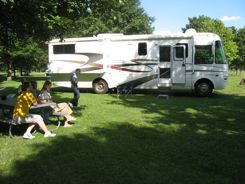
The very largest are Class A motor homes, and you'll most often find these large motor homes in the U.S.
They are 30-40 feet long (9-12 meters)... or longer!
These generally have automatic "slide outs" that make your coach bigger when you're parked.
They have a separate bedroom.
There will generally be toilet and shower facilities, a kitchen and an eating area.
These will tell you they can sleep 6 - 8 people.
Class C Motor Homes - Are Smaller
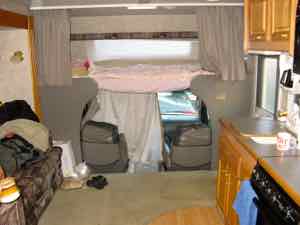
Class C motor homes are a scaled down version of their bigger cousins.
They are in the 20-31 foot (6-9 meters) category.
They generally have a drivers compartment with a bunk over it.
They have most of the same features as the Class A RVs, but on a smaller scale.
These also say they can sleep up to 8 people depending on the floor plan.
As you can imagine, this will mean you are in even closer quarters.
And Smaller Still...
Class B motor homes and van conversions go down in size and amenities from there.
(Why Class B motor homes are smaller than Class C is beyond me... Just reporting the facts... If you know, please feel free to comment and educate us all.)
Can They Really Sleep That Many?
So can they really sleep that many people?
Yes, it's physically possible, but....
It's very cozy.
Sharing an RV with that many people is probably easiest for a family. You can tuck the kids into all those bunks and fold outs and have the bedroom for yourself.
If there are four or six adults sharing an RV, may we suggest that you should be really good friends or family!
Our Experience Sharing An RV
We took a road trip in one of those Class A motor homes a few years ago.
It was a 35 footer (10.5 meters), with two slide outs, a bedroom, and a full bath. The daytime sofa folded to a bed at night, and the dining table area could be converted into another slightly shorter bed.
It was fun, and we were thankful for those walls when there were tornado warnings and thunderstorms shook us.
However...
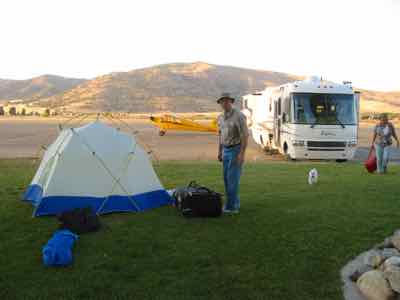
We took a tent along too, and when the weather was good, we slept outside for a little more privacy.
What You Have To Think About
Sharing The Bathroom
You will all be sharing the same bathroom.
If you don't have water and power hook-ups, you will need to conserve water and power.
At some point you have to "dump" the "grey water" and the "black water". The point when you need to empty those tanks comes sooner with more people using the facilities.
We found it was easiest sharing an RV when we were in campgrounds that had shower blocks and toilets that we could use. That gave us all a little more privacy, and we could all get ready faster in the mornings.
Sharing The Kitchen
You need to divide up cooking chores.
The kitchens are small; not enough room for too many cooks.
Take turns, so everyone gets a vacation from cooking.
Room For All When You're Driving
And you need to think about how comfortable it will be when everything is closed up and you are driving to your next destination.
Are you driving long distances? Is there room for everyone to sit comfortably?
We found traveling and sharing an RV was a great experience. It worked especially well for the type of trip we were on. (That was our Cub to Oshkosh trip.)
Even so, after three weeks, we were glad to get home and out of the RV.
If you think you can get along with your fellow travelers and deal with the tight quarters, we say go for it.
Sharing an RV can be an interesting experience.
Happy travels... even if you don't travel the world... just remember that life is a journey... embrace and enjoy it! Judy and Mark
Curious about what else we've written about? Search our site for a destination or travel tip.
But... We'd love to have you share this page or comment on it…
Thanks, Judy and Mark

International Travel Tips l Europe Travel Tips
Hotel and B&B Tips l Packing Lists
Go to MouseToursTravels Home Page

Timely Tips
Summer Vacation
Travel is fun in the Northern summer... but don't neglect the Southern Hemisphere at this time of year.
Yes, it's winter in South Africa, but that's their dry season. It's a good time to travel there.

Sometimes you need to watch rain patterns instead of just seasons to figure the best time to travel...
Whether you're taking a road trip close to home or traveling abroad...
Whether it's summer or winter in your part of the world...
the way you pack can make it all more pleasurable.
Check out all our Packing Lists and Tips.
Need travel ideas?
Things to See in Europe
Africa Calls!
Travel In America
Don't just dream about it...
Start making plans!
Custom Tour Planning List
International Travel Planning Tips
Foreign Is Fun - Not Scary!
Get Your Passports and Visas
And Expect Good Things
There Are Tourist Angels
Search
Search MouseToursTravels
Travel questions or destination info?
Find our answers faster...
Translate
We want you to feel comfortable out in the world and on our pages - so surf away in your own language...
Updated Tips & New Travel Stories


-
2022 Travels To All Seven Continents
 After COVID, all seven continents in one year was a worthy goal for our 2022 travels..
 -
2021 Travels - Another COVID Year?
 Our 2021 travels were only domestic. COVID kept us close home. Road trips and a cautious flights but still fun.
 -
2020 Travels - What Travels?
 Our 2020 travels were slim. COVID kept us home too. One trip to the Three Guyanas, but dreaming of travel next year.
Two Ways To Like Us!
Like Our Site Top Left
Like Our Fanpage Below
Thank You!
Navigate Our Site
Related Pages
on
Foreign Rental Car Tips
Ideas
Road Trip Ideas
Packing for roadtrips
General Information
Worldwide Roadtrips
Foreign Rental Cars
Driving In Foreign Places
Driving On the Left
Toll Roads
What Is A Highway
US Highways
Highways or Backroads
Reading Roadmaps
Know The Rules
International Roadsigns
Traffic Laws Abroad
Autobahn Etiquette
Parking In Cities
RV Stuff
RV Road Trip
Rent An RV
Traveling With An RV
RV Travel In Europe
Sharing An RV
And Just For Fun
Amusing Confusing Roadsigns
Funny Polish Detour Sign
Border Crossings
Document Rental Car Damage
Ready For A New Adventure?
We escape by traveling…
But there are more ways to escape.
Work on something you LOVE…
With A Website
SBI Teaches You Everything

New! Comments
Have your say about what you just read! Did it help with your travel planning and preparation? Eager to leave on that next vacation? Please leave your tips or comments in the box below.